
Priority service
Aluminium profile shutters and glass cabinet work
A slim aluminium frame holding a glass panel, used where a solid door would close the kitchen down. It is a small detail with a disproportionate effect on how a whole run of cabinets reads.

What it is
What it is, and why it changes the room
A conventional shutter is a single board. A profile shutter is a frame - usually aluminium, a couple of centimetres wide - with a panel set inside it. The frame carries the hinge and the handle, so the panel can be glass.
The practical effect is depth. A wall of solid doors is a flat plane; the moment two or three of them become framed glass, the cabinet run has an inside as well as a front. Add light behind the glass and it stops being storage and becomes part of the room.
The visual effect is the frame line itself. Aluminium lets you have a much finer edge than a board can hold, which is why profile shutters read as precise where a thick painted frame reads as heavy.

Where it goes
Three places this earns its cost
Used selectively it looks deliberate. Used everywhere it loses the contrast that makes it work - so these are the positions we would suggest first.
-
01
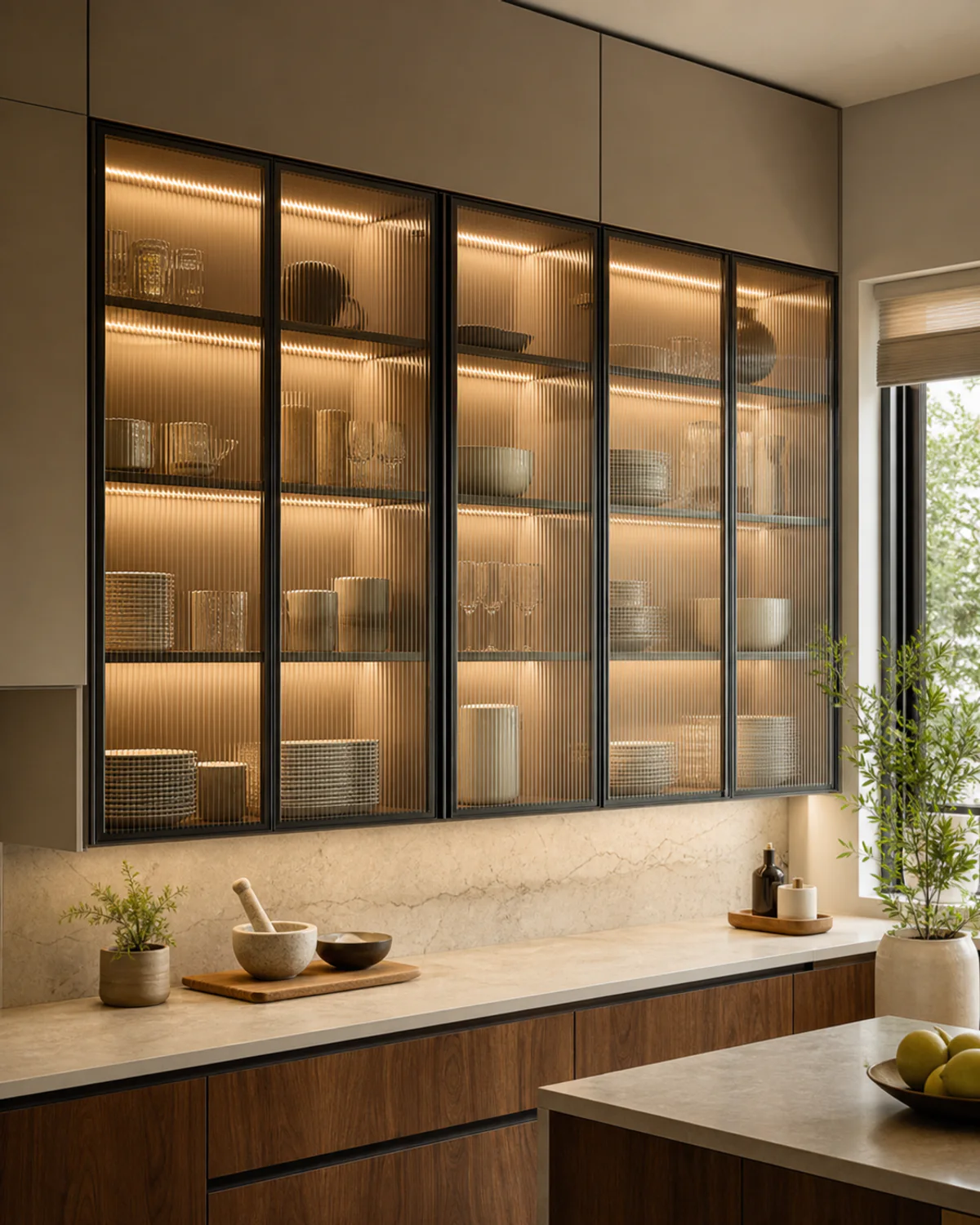
Kitchen display cabinets
Best forCrockery, glassware and lit display runs
A cabinet that shows what is in it rather than hiding it. Works best where there is something worth looking at - glassware, crockery, a collection - and where it can be lit from inside.
-
02
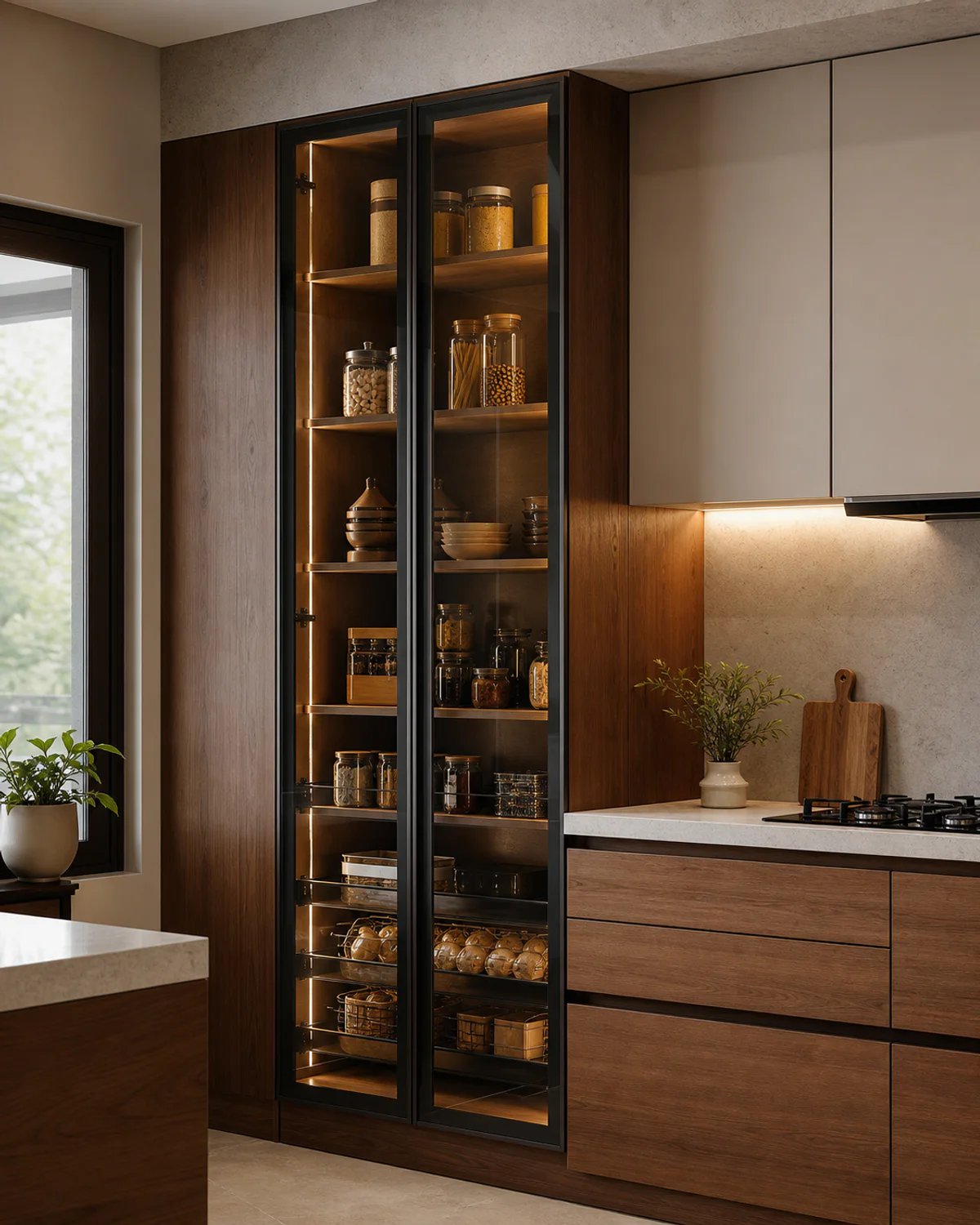
Tall-unit glass work
Best forPantry storage and full-height kitchen runs
Profile and glass on the upper doors of a full-height unit, breaking up what would otherwise be a two-metre wall of solid shutter, while the lower doors stay solid.
-
03
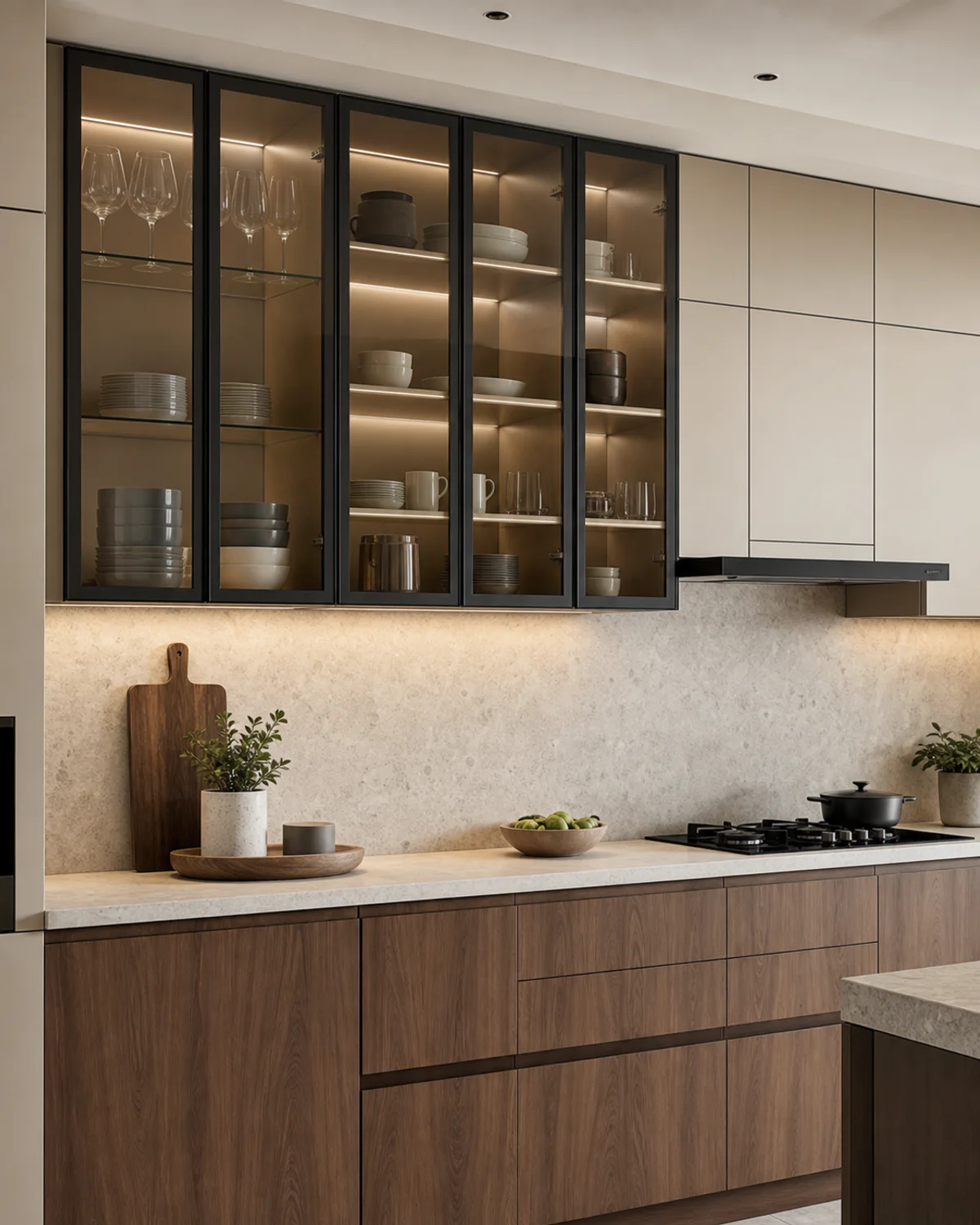
Wall-cabinet profile shutters
Best forUpper cabinets above the working counter
Used across part of a wall-cabinet run to interrupt the solid line. The slim frame reads as a horizontal band, which visually lowers a tall run of cabinets.


Glass character
Choose the glass expression
Glass selection changes visibility, light diffusion, maintenance and the overall character of the kitchen. The right choice depends as much on what you will store as on the colour of the frame.
Select a glass card to update the central preview.

The components
What gets specified
A profile shutter is an assembly, and each part of it is a decision. Getting the hardware matched to the actual weight is the one that most often goes wrong elsewhere.

- Frame profile
- Glass panel
- Gasket / glass retention
- Hinges
- Lift-up mechanism
- Profile grip
- Integrated lighting
- Frame profile
- The aluminium section itself - its width and edge shape set how heavy or fine the shutter reads. Finish options are confirmed against samples.
- Glass panel
- Held within the frame rather than fixed to the face of a board. Available options are confirmed at material selection to match what can actually be supplied.
- Hinges
- Concealed soft-close hinges rated for the combined weight of frame and panel, adjustable so the shutter gaps line up across the run.
- Lift-up mechanisms
- For wide wall cabinets where a side-swinging door would obstruct the counter. Gas-strut force is matched to the actual shutter weight.
- Handles or profile grips
- Either a separate handle or the frame edge itself acting as the grip, depending on the profile chosen and how minimal you want the front to be.
- Integrated lighting
- In-cabinet or profile-mounted lighting. Glass without light behind it looks like a dark cupboard with a window; light is what makes a display cabinet work.
- Gasket / glass retention
- The channel, gasket and retention detail keep the glass stable inside the profile and reduce rattle when the shutter is opened or closed.
Finish pairings
Profile and glass combinations
The frame finish decides the line. The glass decides how much the cabinet reveals. Treat them as one composition, not two separate samples.
-
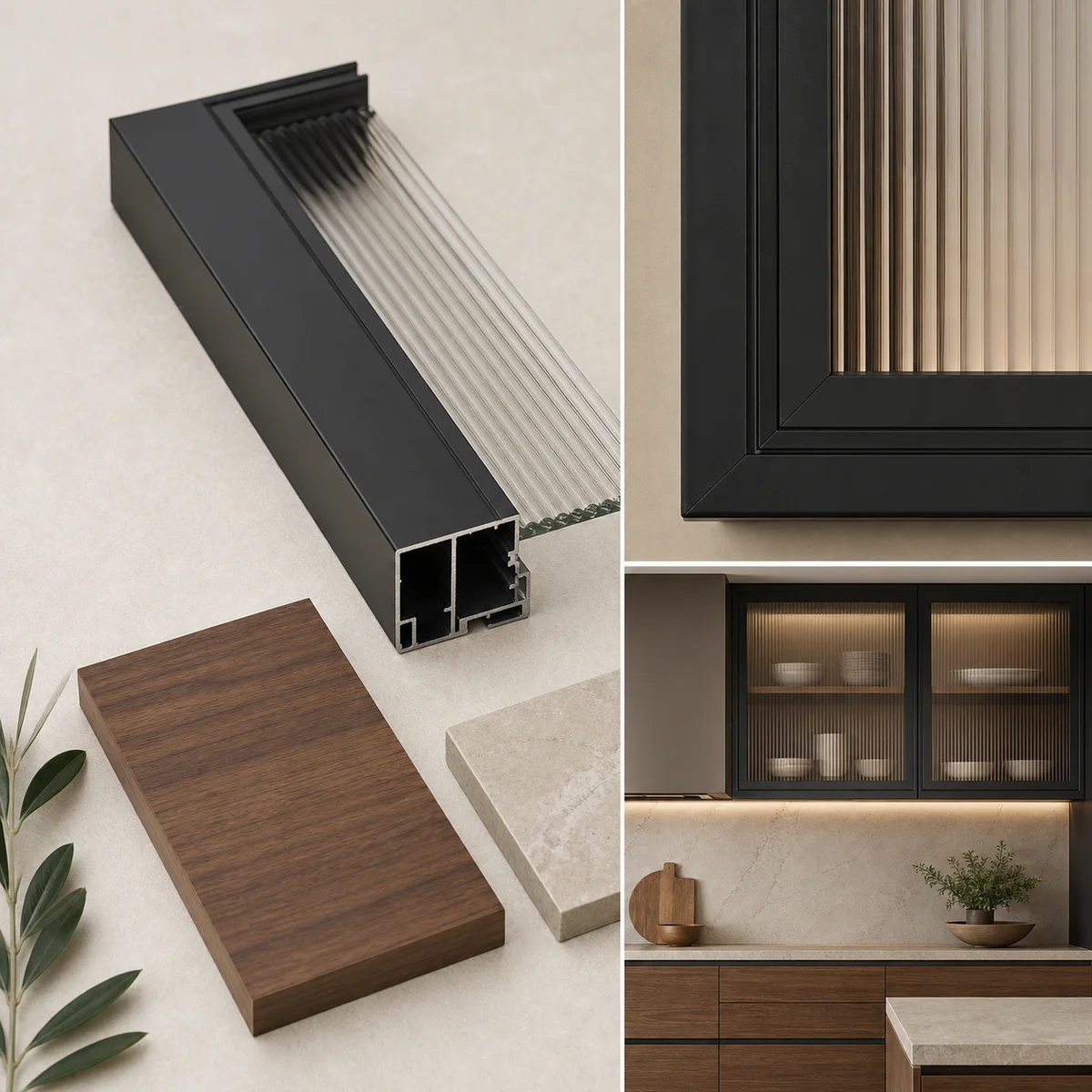
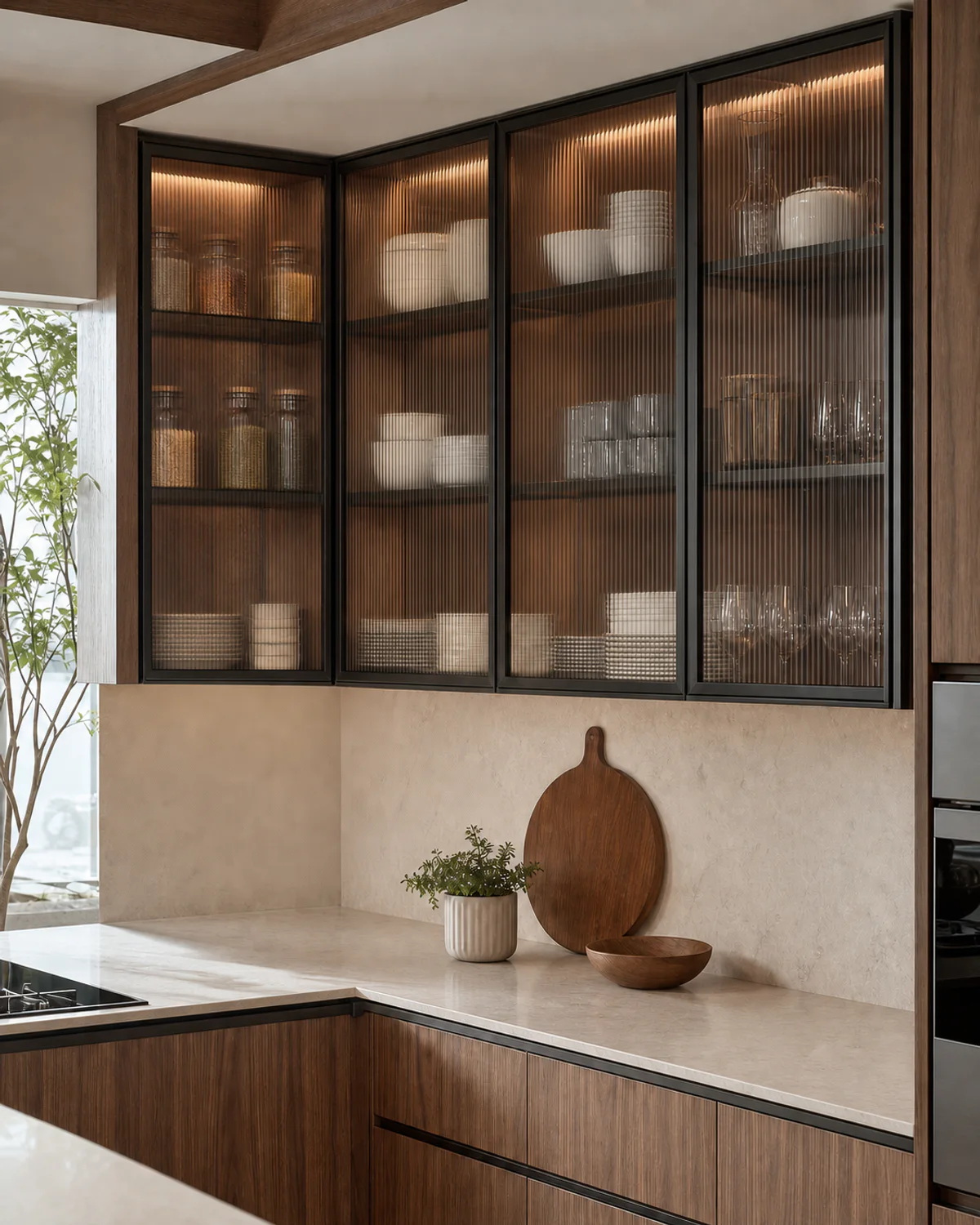
Architectural
Matte black + fluted
- Frame
- Matte black aluminium
- Glass
- Fluted glass
Best when the kitchen already has dark handles, appliances or linear accents.
-
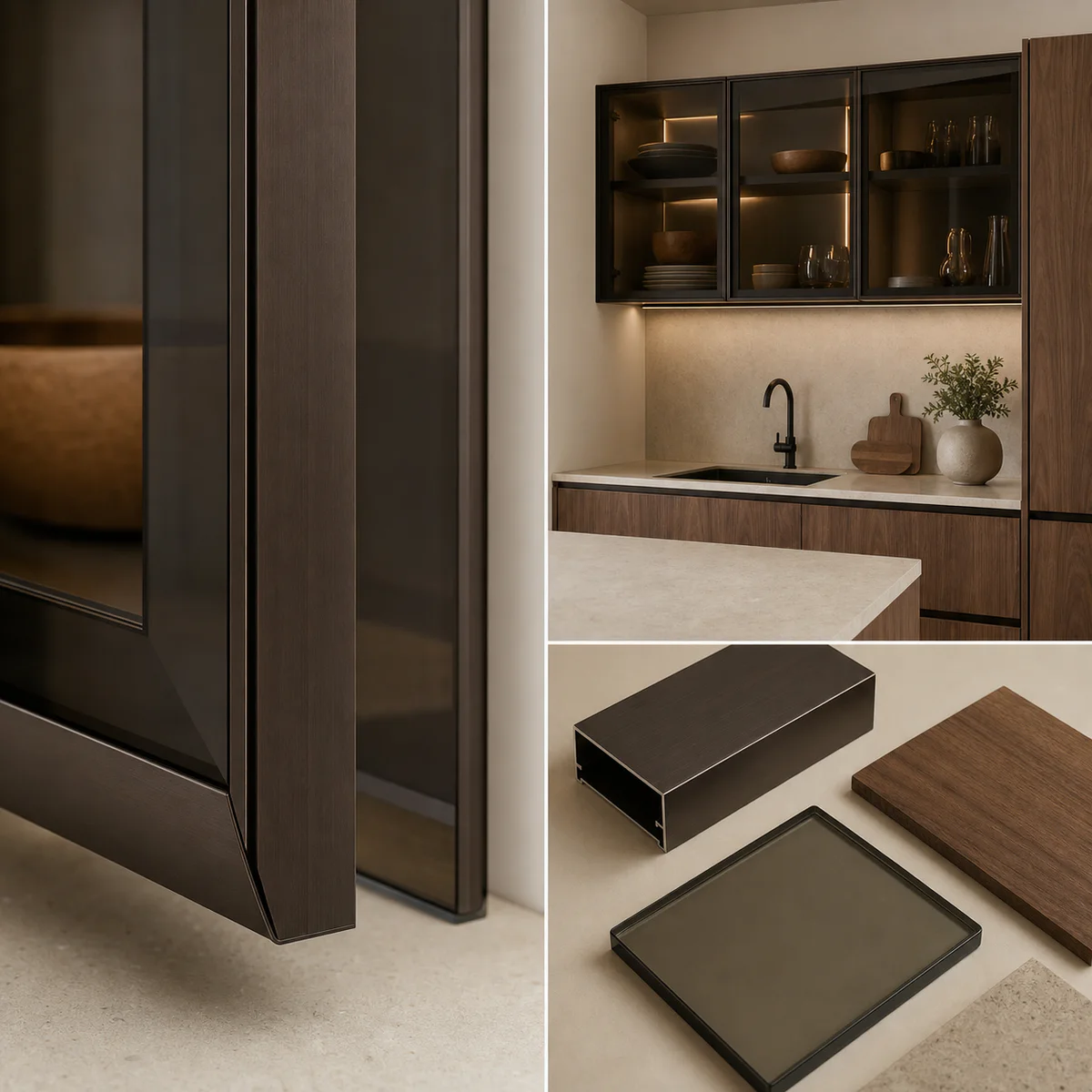
Warm
Dark bronze + smoked
- Frame
- Dark bronze aluminium
- Glass
- Smoked glass
Works well with walnut, beige stone and a softer evening-lit kitchen mood.
-
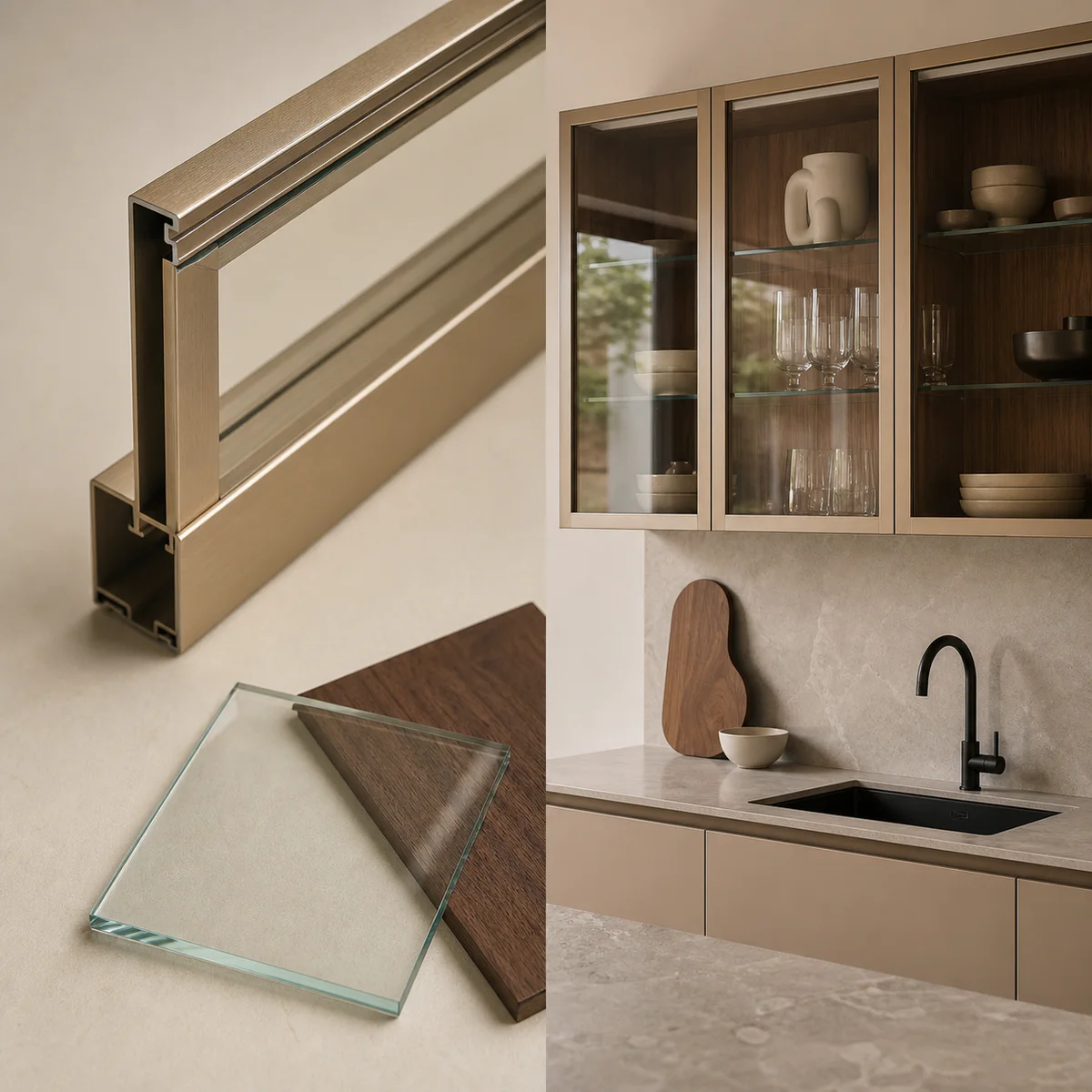
Light
Champagne + clear
- Frame
- Champagne aluminium
- Glass
- Clear glass
Good where the room needs a finer, brighter line without turning fully black.
-
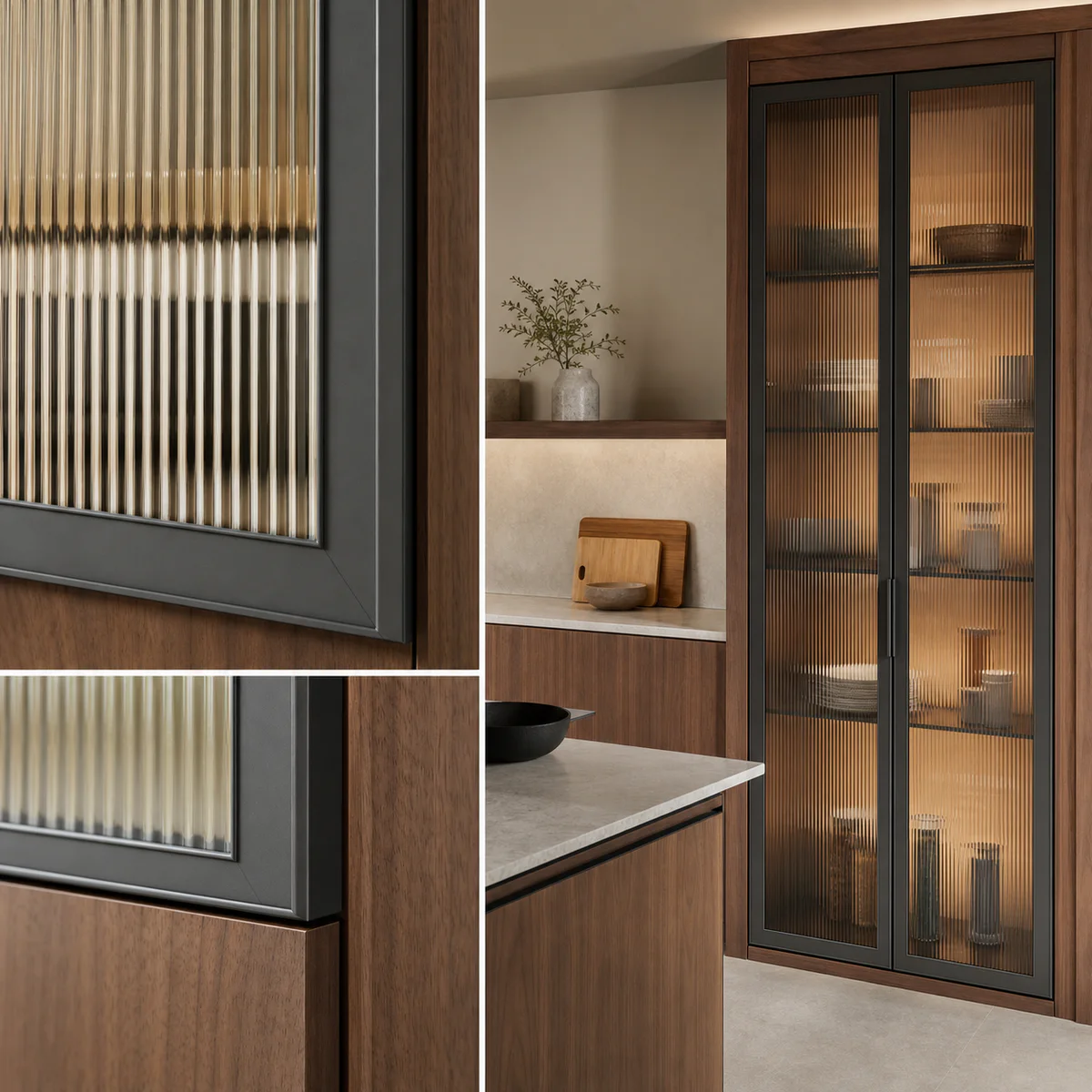
Private
Walnut + reeded
- Frame
- Aluminium within walnut
- Glass
- Reeded / tinted glass
Useful for pantry runs where texture should hide small storage clutter.


Getting it right
Four things worth deciding early
-
What will remain visible
Glass turns storage into display. Decide which shelves can stay orderly before choosing clear or textured glass.
-
Where lighting will sit
Cable routes, LED channels and service access need to be planned before the cabinet is manufactured.
-
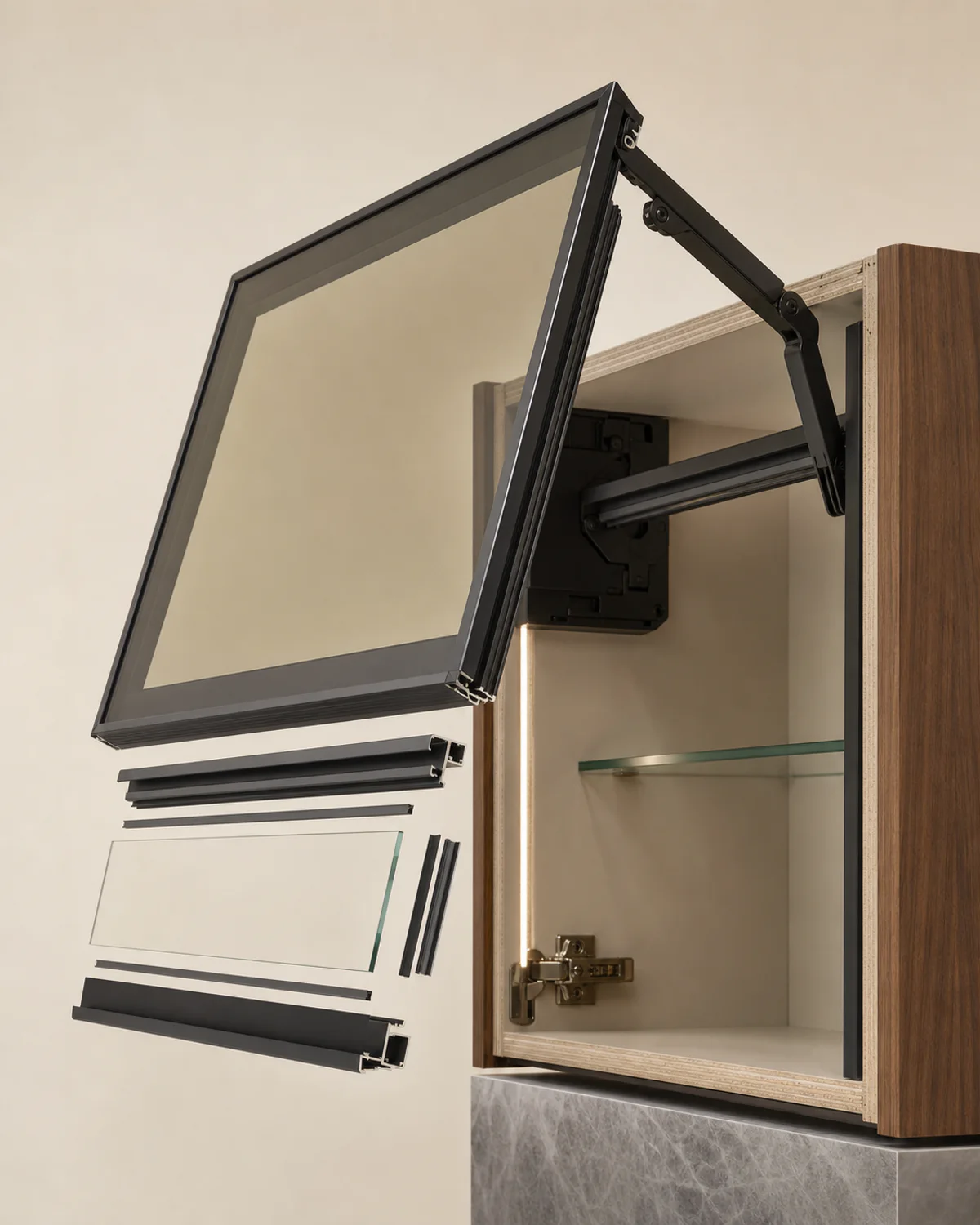
How the shutter opens
Side hinges and lift-up mechanisms behave differently once glass weight is added to the frame.
-
Which frame and glass finish suits the kitchen
Black, bronze and champagne profiles each change how strongly the line reads against walnut or beige shutters.


Profile shutters & glass
Frequently asked questions
What is an aluminium profile shutter?
A slim aluminium frame that holds a panel - most often glass - instead of the shutter being one solid board. The frame carries the hinge and the handle, so the panel inside it can be thinner and lighter than a conventional door. The result is a much finer edge line than a solid shutter can give you.
Where do profile and glass shutters work best in a kitchen?
On wall cabinets, on the upper doors of a tall unit, and on any cabinet you want to read as a display rather than as storage. They are most effective used selectively - a long run of solid doors broken by two or three glass fronts looks considered, whereas glass everywhere removes the contrast that makes it work.
Which glass options are available?
Glass choice depends on what is currently stocked and what suits the cabinet, so we confirm the available options with you at the material selection stage rather than listing types here that may not be available for your project. Bring us the effect you want - fully visible, partly obscured, or textured - and we will show you what can be supplied.
Is glass practical in a working kitchen?
On wall cabinets and display units, yes. Glass is easier to wipe than most shutter finishes and it does not show the wear pattern that laminate and acrylic develop around handles. What we would not usually recommend is glass on base units immediately beside the hob, where splashing is constant and the cabinet is at knee height.
Can profile shutters be added to an existing kitchen?
Often, yes. If the existing carcasses are sound and their openings are square, replacing selected solid shutters with profile-and-glass fronts is one of the most visible improvements available for the money. We check the carcass condition and the opening dimensions at the site visit before committing to it.
Do profile shutters need different hardware?
They use the same families of concealed hinges and lift-up mechanisms as solid shutters, but the weight of the frame and panel has to be matched to the mechanism correctly - a lift-up sized for a light solid door will not hold a framed glass panel properly. That matching is part of the specification.
Profile & glass work
Arrange a consultation
Whether it is a complete kitchen with profile detailing or replacing selected shutters in a kitchen you already have, the starting point is the same - a look at the cabinets and a conversation about the effect you want.
